Following the departure of my Highland cattle herd at the end of 2024, I decided to reforest the farm, wanting to leave behind a more diverse, resilient and productive landscape than the one we had taken on and that could still be useful for small scale agriculture, namely livestock raising by successor owners. Agroforestry imitates the structure and function of native forests. Here on the farm, the idea is to apply agroforestry principles by planting mixed hedges in food forest layers along contour across pastured fields in deep protective mulch.
The ultimate effect might look something like this: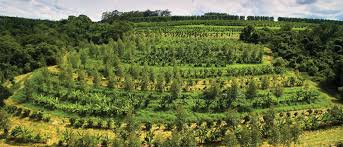
My aims are to preserve wide grassy lanes between planted rows large enough for tractor access, preserving the option of productive agricultural use incl. haymaking and/ or animal grazing in the corridors with attractive additional browsing fodder.
The trees should provide animal shelter and fodder, firewood, woodchip, fence making material, basket willow, (Oak, ash, alder, chestnut, willow, hawthorn, Rowan, Christmas trees…)
The basic desired outcome is to improve water infiltration, provide wind shelter for the lower lying parts of the farm, erosion protection for the slope and improved soil health.
To minimise the financial investment, saplings will come, for the most part, from a home made plant nursery.
Suitable plant species selected for planting:
Oak, Beech, Lime, ash, white birch, alder, hornbeam, foxglove tree, crab/apple, damson, hawthorne, spindle, service tree, wayfarer tree, elder, hazel, mahonia, ficus, medlar, walnut, Camélia sinensis (tea), blueberry, wild cherry, rowan, wild pears, field maple, holly, Ivy honeysuckle, fejoa, persimmon, dog rose, gorse, dogwood, privet, quince etc.
Each sapling is planted in the most ideal location taking account of its preferences and vulnerabilities i.e. exposition to the sun, soil type, humidity, shade, shelter, companion plants etc., characteristics such as eventual size, speed of growth, nitrogen fixing capacity, foliage habits, mulch production, tolerance to wind, drought and frost and their propensity to being damaged by browsing animals or protection against it (e.g. thorns).
2025
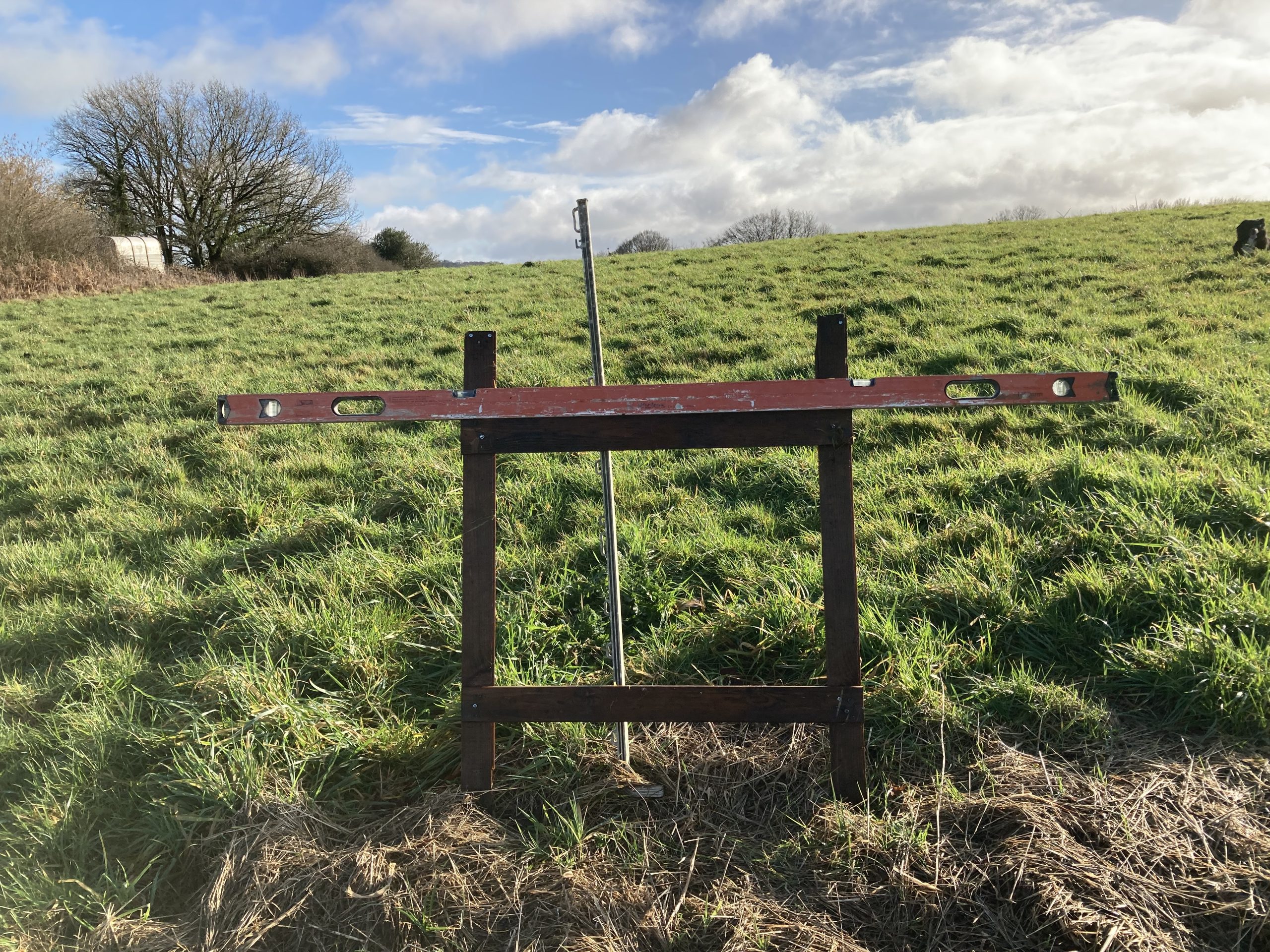
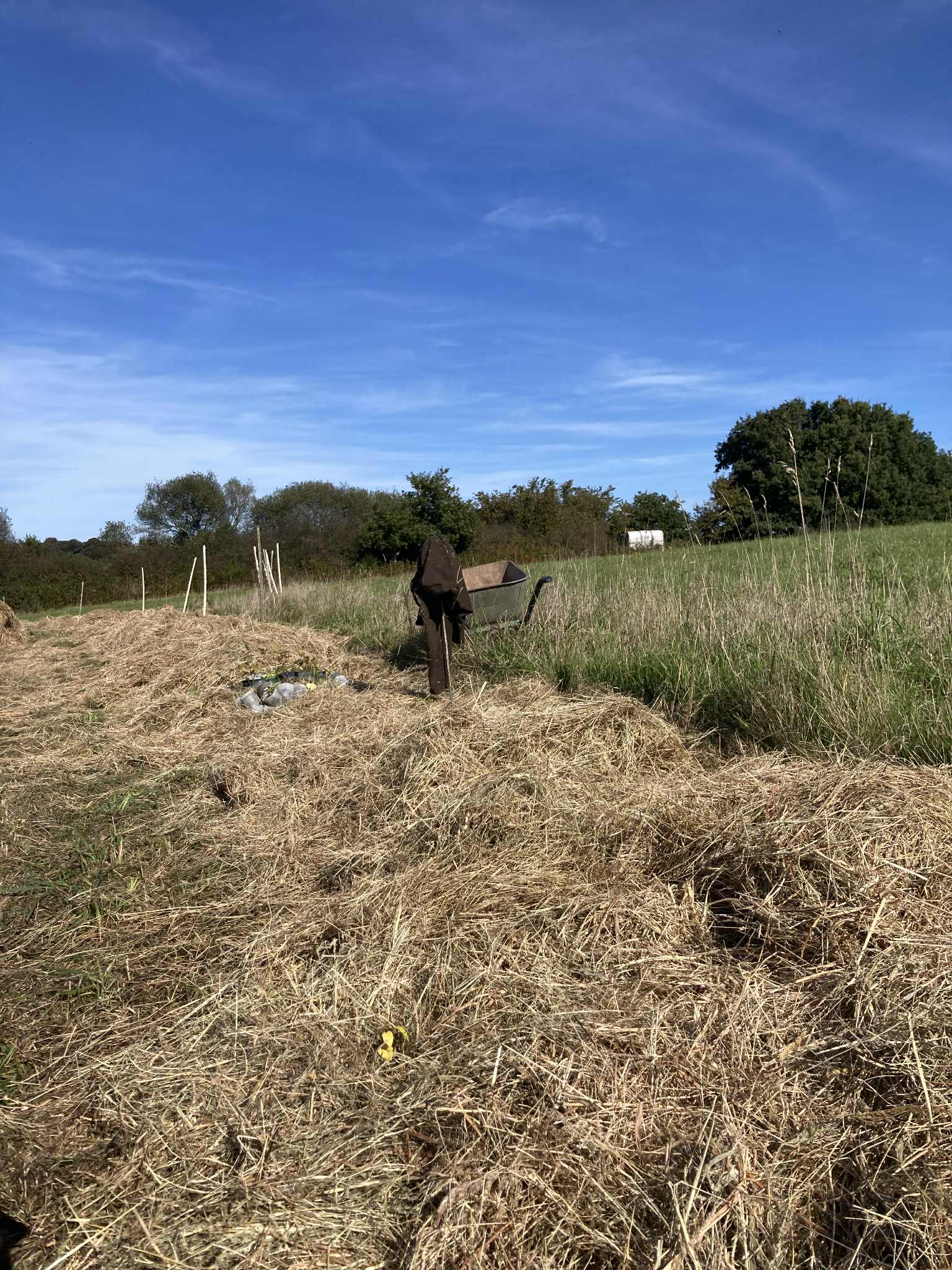
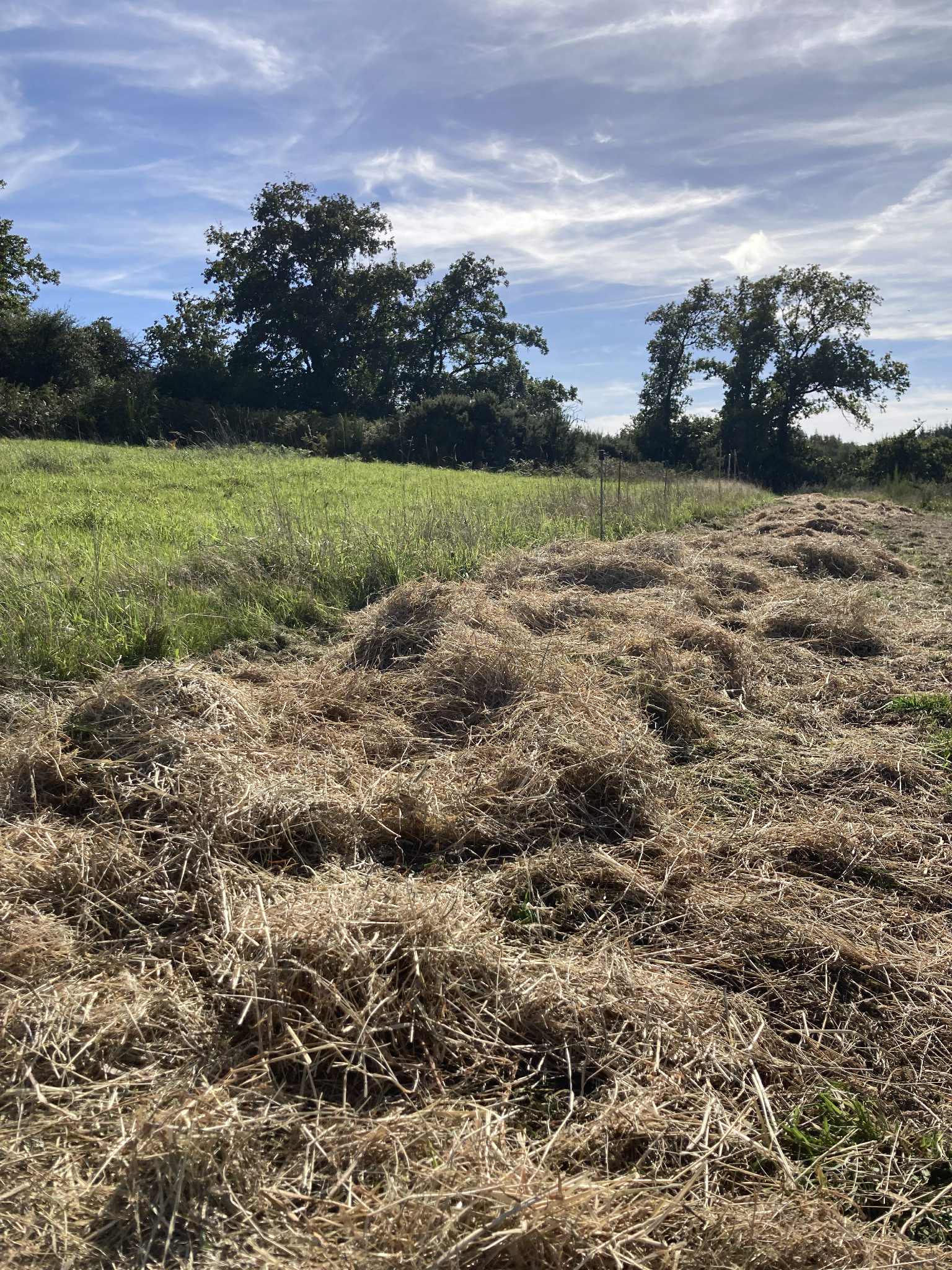
In the first year of the project, 2025, I planted one first row of homegrown saplings on the north west facing slope of a saddle at the top of the farm (230-240 m above sea level), some way down from the top of the hill (watershed) on contour.
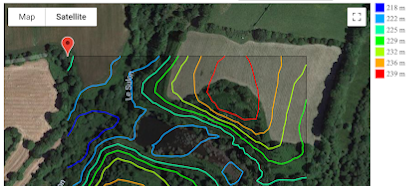
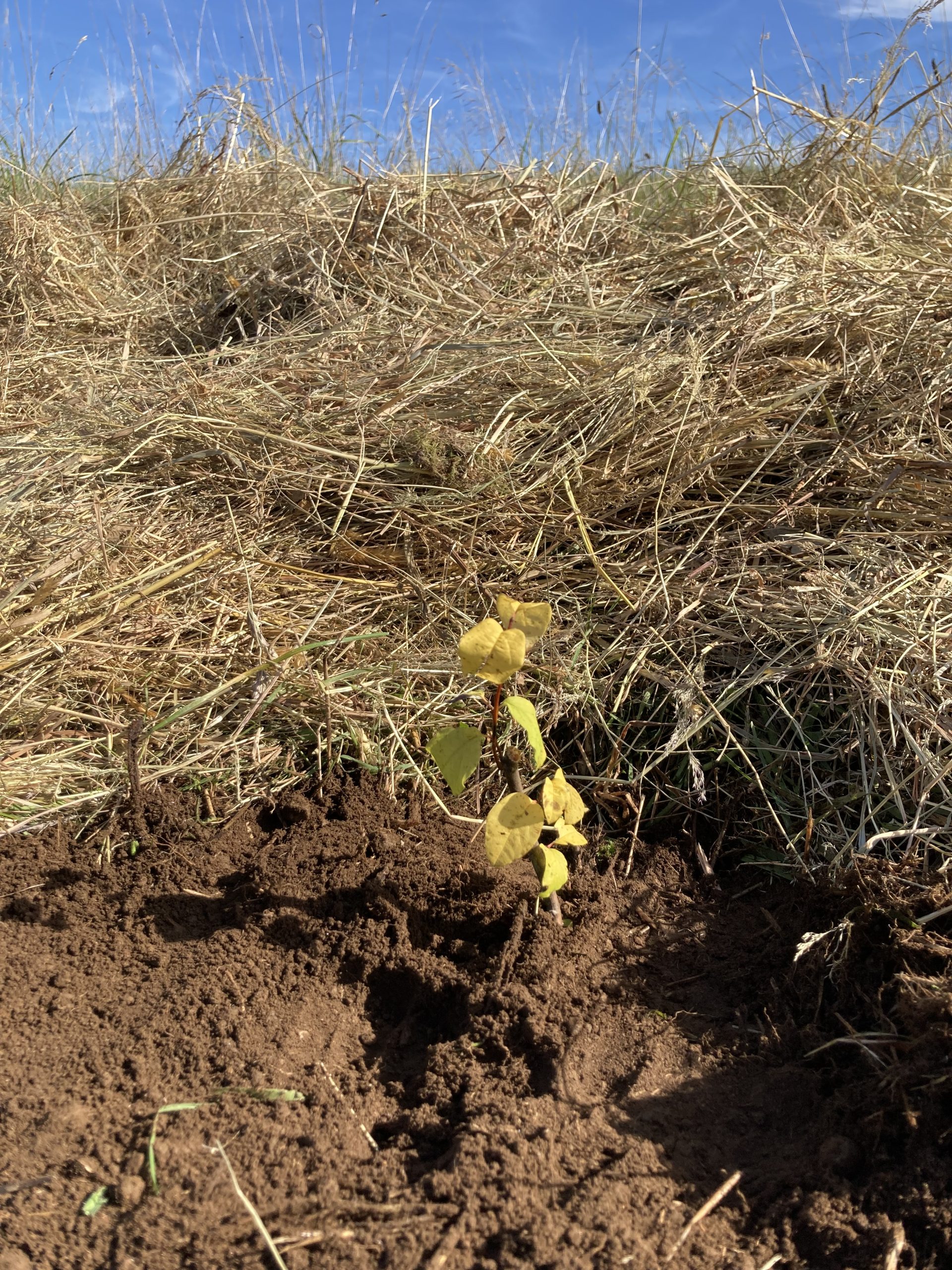
I mowed and then deep mulched the row with old hay in mid summer. I selected cold and wind resistant species benefiting from full sun midday onwards: Lime, hazel, yew, apple, damson, hawthorne, hornbeam, wild cherry, gorse. Cuttings were taken during spring and early summer, from the farm and surrounding area, encouraged to root and planted out in late September.